You find that you are often limited by your camera in-built and sometimes you feel envious that other people can produce a good picture with natural lighting with their external flash as opposed to your harsh lighting with your built in flash. You would also like to expand your creativity by experimenting with the different lighting. You have read that there are many ways to play with the flash and are excited that you can expand your creativity to the different ways flash is used. You would like to take that type of photo you have seen on the Internet but you will have to do a research to find out what sort of flash are available on the market to suit your needs. In this section will introduce the different flash available in the market.
There are four main types of flash available on the market:
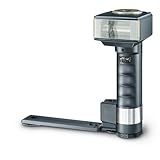
Handle mount flash
Handle- mount flash traditionally is more powerful than the shoe-mount flash and communicates via a cable. The disadvantages are that it usually mounted on one side of the camera and they can be quite distracting to use. They are difficult to store as they are quite big in size.
Shoe-mount flash
This type of flash is most commonly used and is very easy to bring due to their small size. This flash communicates with the camera via shoe-mount which is found on top of your camera. You can also purchase a wireless trigger to achieve a wireless photography or you can purchase an off camera shoe cable so that you can place your flash at a different angle if you do studio photography.
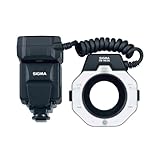
Ring macro flash
As the name suggested, this flash is generally used for macro shot. It is shaped like a ring and the flash is either with attached to the ring or is found in the ring. Usually this flash is less powerful as compared to the rest of the flash available.
Strobe flash
Strobe flash is commonly used for studio photography. They are more bulky and consumed more power than the rest of the flash mentioned above. If you ever want to take a professional portrait or earn some money as a studio photographer, then you should consider purchasing this flash. Take note that this type of flash is not cheap and if you really want to try out studio photography, try getting a few small compact flashes instead of strobe flash.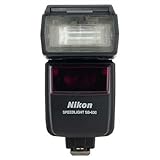

Most of the flashes available in the market use guide number to indicate how powerful the flash is. Pay attention to the guide number of each flash, as a high guide number indicates a powerful flash. There is also some additional flash features that you can take note of. Some flashes offer you a complete manual control such as the freedom to set your own flash output, the ability to use different flash types (i.e High speed flash, 2nd synchronisation flash, bounce flash, etc) while other flashes will not be able you to set manually. There are some in-built diffusers such as a mini bounce card available in the flash. They are very useful if you want to shift some part of the light to light up your object to achieve natural lighting.
Conclusion
If you really feel that your in-built flash is insufficient or you want to branch into flash photography, then get flash. For a start, getting a shoe-mount flash is good as they are light, compact and easy to carry around which makes them popular. Once you have become experienced in handling flash, you might want to consider upgrading to other types of flashes.
Read more!
 Subscribe in a Digital Photography Academy
Tuesday, June 16, 2009
Flash buying guide


Digital camera accessories buying guide
When you purchase your camera, there are some accessories that might come along with your cameras. The most common one are a tripod, len cleaning kit and a camera bag. You might need additional items for your camera or need an upgrade if you find that the accessories that come along with your camera do not suit your needs.
Bag
A bag is a must have to carry your camera equipment around for shooting. Camera bags come in three types: small carrying bag for compact camera, sling bag and backpack. A small carrying bag offers limited spacing to contain a compact camera and a few memory cards. A sling bag is good if you want to access your camera quickly and you probably need a few light lens and a flash to complete your shooting tasks. The downside of having a sling bag is that the weight will be on one side of the body and will cause you pain on that side if you are carrying it for too long. If you need to carry more stuff and stay out long for your shoot such as hiking, then you might find it worthwhile to invest in a back pack. Backpack comes with different configuration such as a laptop compartment and tripod attachment. In addition to all camera bag which are made of water resistant material, some bag have additional water proof casing that can enclose the whole bag. The bad thing about the backpack is that if you might find yourself sweating after carrying for long period of time.
Dry cabinet
A dry cabinet is a must have for digital SLR owner as they need to keep their lens and camera equipment in a relatively dry environment. Lens, especially are prone to fungus growth if stored incorrectly. If you find yourself budget constraints, you might want to get an airtight container to store your camera equipment and purchase a silicon gel to place into the container to absorb the moisture.
Len cleaning kit
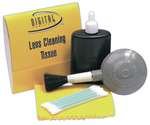
TripodThere are many brands of len cleaning kit available on the market. Most come with a solution with a cloth, a cotton bud and a blower that helps you clean your len but there are also len cleaning item in the form of pen available in the market. Such pens have a brush and a wiper to help you clean your len. Another example is the LensPEN Lens Cleaning System. 


2. doing a paranomic shot of the scenery such that when you doing stitching, you might want the image height to be the same.
3. doing a panning shoot where you want to avoid vertical movement of your camera.
It is best to get a tripod to suit your height and ensure that it can handle the weight of the camera and it is stable.
Cable release, flash trigger
You might want to get a cable release if you find yourself doing a lot of firework shoot, product shoot or any shoot that requires you not to touch on the shutter button on the camera to minimise camera shake. You might even want consider a wireless remote controller to control your camera from a distance if you want to do a self portrait. An off camera shoe cable is another useful item when you want to position your flash at a different angle or you want to use an off camera flash instead of attaching directly to the camera hotshoe to take an object. You can consider getting a wireless trigger for your flash if you want to position your flash and you want to minimise the amount of cable used as it is hazard and you might trip over if you are not careful.
Len filter and len adaptor
There are many different types of len filters available in the market. Len filters such as polariser and ND filter are great to have but not necessary to own. There are also some len adaptors that allow you to attach on the front len element. Such adaptors allow you to do some creative shooting such as sliding a cardboard with a heart shape on the adaptor or do macro shooting. But be warned that multiple attachments can introduce some vignetting.
LCD hood
LCD hood is not necessary to get as it is made for outdoor usage. Sometime under a bright sunny day, when you want to view pictures, the strong sunlight can prevent you from viewing the pictures. Thus a LCD hood can be attached to help you to view pictures. Because of the LCD hood is attached to the camera, it will block you from viewing the viewfinder. As such you may need to adjust your LCD hood to allow you to take picture. If you find it troublesome, then the best thing is not to get it as you can always use your hand to block the excessive sunlight so that you can view your pictures.
Conclusion
Although there are many different accessories available in the market, you might find it a headache as the choices are limitless. The common ones are dry cabinet, a len cleaning kit and a camera bag. It is advisable to get the common ones first if you are starting up and decides the rest when you become more experienced.
Read more!


Monday, June 15, 2009
Buying len guide
You have switched from compact camera to digital SLR and you realized that you have a huge range of len to choose from and you are not sure which len to get for photography. This section will introduce the different types of len that you need to know and certain features that manufacturers will introduce in their len.
Telephoto len
Telephoto len refers to len that is more than 200mm. Telephoto len is usually good for taking object where:
Normal len1. The place the object in is inaccessible.
2. You want to achieve a shallow depth of field when taking portraits (i.e you want to blur the background and make your people stand out).
3. You want to shoot the object from a distance such as candid shot.
Telephoto lens are very vulnerable to handshake. You can try to experiment with the len and zoom at the tele end of the len and you will find that handshake is obvious when you try to hold your camera. Some high end lens offer image stabilizer ability and they are very expensive. Such feature is extremely useful especially when you are faced with low shutter speed or you don’t have any form of support to help stabilise your camera.
Normal len usually have range from 40mm to 100mm. This type of lens is usually good for walk about len where you may want to take the surrounding place that does not require telephoto or wide angle len. Normal len can also be used for portrait and other aspects of photography that requires the range mentioned. The advantages of using a normal len are it eliminates the need to switch the len and also reduces your camera equipment load.
Wide angle len
Anything less than 28mm can be considered a wide angle len. Wide angle len is mostly used for scenery shot (e.g mountain, sunset on a beach) or the space area is very limited. Wide angle offers a deep depth of field so an average photographer can get decent and relatively sharp pictures.
Zoom VS prime len
Len speed /apertureZoom lens are gaining in popularity since they eliminate the need to change len and help to reduce camera load. Still len makers are making prime lens for different focal length. You may wonder why this is so and this is because traditionally, prime len produced sharper images than the zoom len. But with the improved in technology, the difference in sharpness produced by zoom len and prime len are almost on par with each other.
By saying a len has fast speed, it means the len has low aperture (i.e the size of the len hole is bigger, thus more light can be captured by the camera). This enables you to use fast shutter speed, hence the term fast len. You need low aperture if:1. You want to achieve a shallow depth of field so as to isolate your object from the background.
2. You find yourself in low light condition and the need of small aperture is crucial.
3. You want to get more shutter speed to freeze a moving object by setting a low aperture. When taking the aperture into consideration, you have to ask whether you need a fast len as it is more expensive than slow len. If you are pursuing a general photography, then a fast len is not probably needed and an aperture of f/3.5 – f/5.6 should be sufficient.
Len Compatibility
Most len made in the past are for film body (i.e they are made for 35mm format). But this does not necessarily mean it cannot be used in a digital body. Digital body can also take in len that is made for full frame but their focal length will increase. This is known as the crop factor and most digital SLR have crop factor from 1.3x to 2x depending on the manufacturers. This is another factor you need to take into consideration. For example, to achieve a 15mm in 35mm format, you will need to get a len that is 10mm with a crop factor of 1.5x. There are also some lens that are made exclusively for digital camera with crop factor and cannot be used in full frame body. The common acronyms used for len designed for crop body are DC for Sigma, EF-S for Canon, DX for Nikon and Dii for Tamron. If you are going for full frame body soon, it might not worthwhile to invest in such len.
Additional stuff and acronyms for len Some lens come with a len hood which you can mount on top of your front len element to reduce flare as well as to protect your len. It is recommended to purchase a UV filter to protect your front len element because some lens doesn’t come with len hood and you may not need a len hood all the time and also if there is no UV filter on, your front len element will be prone to scratches. Some additional filters such as polarizer, warm or cool filter, infrared filter that you might also want to consider to purchase but is optional if you are very new to digital SLR system.
You might also be interested to know some common acronyms used by different manufacturer to describe the len. Image Stabilizer (IS), Vibration Reduction (VR), Optical Stabliser (OS) lens are used to describe lens that have image stabilizer ability. APO, ED, SLD and LD are terms that used to describe lens with special low dispersion glass introduced to improve colour sharpness, contrast and accuracy. Lens that have Ultrasonic motor (USM) and Hyper-Sonic motor (HSM) have the ability to zoom quietly and achieve faster autofocus.
Conclusion
For a person that is new in photography, it is advisable to get a len that covered wide angle to telephoto len and a cheap prime len like 50mm f/1.8. This allows you to get a feel of the different range of the len as well as discover the range that you normally used so as to purchase a more specialized len in the future. A 50mm f/1.8 will allow you to play with different aperture to achieve creativity. It is also important to read reviews of the len that other people have experience in order to make a good len purchase.
See also other acronyms.
Read more!


Wednesday, May 27, 2009
Guidelines to choose a camera
When purchasing a digital camera, a trip down to the local camera shop will bring you a wide selection of the cameras to choose from. You are spoilt by the number of models available on the shop and you do not know what you want to get. Some common questions were be “which brand is good?”, “how does this model different from that model?”, “what are the freebie if I purchased this?” and so on. This is time consuming because you have spent so much of your time asking questions and playing around the camera. Some dishonest vendors who wanted to earn your money might give you false information about the camera specifications and will lead to think this camera is superior thus you purchased it. But what if the camera you purchased isn’t exactly what you are looking for? Then you have wasted money on something that you don’t probably need. This article aims to provide some guidelines to people who want to buy digital camera. Nowadays, digital cameras are packed with similar features that are difficult to differentiate, you may want to use this guide to zoom down on the models you are interested in and do a research on them. Look here for some terms used so as to get yourself familiarise with before heading down the camera shop.
What do I intend to get a camera for?This is the first question that you ask yourself before proceeding. If you are one of those newbie who wish to get a camera for some basic shoot, you may wish to look for a basic camera which offer the minimum specification such as 3X zoom, slim and compact design, long battery life, etc. Likewise if you are serious shooters, then getting a high end model or DSLR that offer you complete controls on the camera functions.
What’s my Budget?
One of the questions you should ask is how much are you willing to buy a camera. Prices of the camera can range from $200 for a simple point and shoot camera to $5000 for a professional DSLR camera. In deciding the budget, you can try to determine your needs first and set aside the maximum amount that you are to buy or set aside your budget first before exploring other specifications that will fit in your need.
How much megapixels I need?
Most digital cameras nowadays come with 10 – 12megapixels.Usually most casual shooters develop pictures of size 4 X 6” for keepsake and that requires a minimum of 2 megapixels. Unless you need to print large poster, you do not need a high megapixels. There is also an advantage of getting high megapixels. You can crop away unnecessary stuff in the picture and still get a good quality picture but the downside is you will need to get a large size memory card to store them.
Design and specification
When you are looking for design, what will you look for? Most manufacturers offer a lot of series in their cameras. They have ultraportable cameras that are slim and compact to cameras packed with features like super zoom and manual settings (Shutter priority, Aperture Priority, Manual, Program and other preset shooting scene, etc) and often it will have a huge body to accommodate them. There are also different choices of colour to choose from to suit your personality as well.
An example of such camera is the Sony DSC-T900/R. Such touchscreen design comes with additional cost. If you find that you don't need, then spend your money on other features.Battery life is another important element that you need to know. You do not want to miss a critical and precious moment and find out later that your camera battery is flat. Always ask for the battery lifespan. It is usually given in how many shots can be taken or how long the camera lasts.
Most manufacturers have included a large LCD screen. LCD screen nowadays has a lot of functions. Other than providing the users to view pictures and compose shots, it also features touchscreen design which allows user to select function thus eliminating buttons on the camera.
Most compact cameras come with integrated small zoom len. I would recommend to look at the camera focal length instead of zoom as it can be quite misleading. Because different manufacturers manufacture cameras of different focal length thus to calculate zoom, the smallest focal length will be used to divide the largest focal length. For a guide, most compact cameras feature a 3X optical zoom whereas the most serious one feature 10x or more or an interchangeable len.
There are a number of models that offer different preset shooting scenes such as portrait, landscape, night, auto, etc. Look out for them as it comes in handy especially when you are learning photography. Other specifications such as exposure compensation, red eyes reduction system may also come together with the cameras.
Media usedIt is important to take note what type of memory card that your camera is using. Small compact camera uses a small memory card such as SD card, xD card or memorystick (for Sony camera). Bear in mind that even within the card itself, there are a lot of variant such as SDHC, micro SD, mini SD for SD card. Large camera typically uses compact flash or memory stick (for Sony camera). So get the right type of memory card if you need more. I would not advise to get a high speed card as there is a limitation on how the camera records the image. Spend more on the size of the storage of the memory card rather than the speed of memory card.
Additional camera features
Most cameras come with a lot of additional features. Features such as face detection which allows you to take group shot with better details and clarity, blink detection which serves as a warning system to tell user that the subject’s eyes are blinking and noise reduction features which will reduce the noise level as you set to high ISO. If you are those who ventured scuba diving, you can try to get a camera with water proof protection such Olympus μ Tough series camera. It would be advisable to look for a camera that has image stabiliser capability as this is very useful when you want to take pictures at low light and also compact camera being small and light, has a high chance of handshaking. Cameras that come with high ISO are also useful as it can help to combat handshake. A HD movie is also useful when you want to take high quality video and with a video editing software, you will be able to share with your friends and relative high definition video.
Review from the Internet
Always look through a number of reviews on the camera that you are interested in. Why is there a need to read so much? Because certain reviews tend to be biased or provide incomplete picture of the camera, it is important to read through them to get more information about the camera you are interested in before purchasing. If you find that the reviews on particular camera are unavailable, try accessing the forum to see if there is any member who have purchased and tried the camera. This will give you a rough idea on the camera’ performance.
Always buy from reputable vendors
Like what I have mentioned earlier, some vendors may try to cheat your money by promoting camera that will not suit your needs or mislead you. A good camera shop will guide you on the selection process like the budget that you set aside, your needs and a proper explanation on camera specification.
Conclusion
Buying a camera can be a time consuming process. A lot of research needs to be done before deciding on the model that you want to buy. However, if you follow the guide well, you can shorten your process and you can decide quickly as to which camera you want to buy.
Read more!


